When most people close their eyes and conjure an image of Nepal, their imagination immediately drifts to the towering, jagged peaks of the Everest region, the bustling trails of Annapurna, or the prayer-flag-draped monasteries of the upper Himalayas. These are the postcards that have defined a nation’s tourism for half a century. But tucked away in the far northwestern corner of the country, hidden behind rugged mountain passes and isolated valleys, lies a completely different kind of Nepal.
It is a Nepal that doesn't shout; it whispers.
This is the realm of Rara Lake.
The Arduous Pilgrimage
To reach Rara is to embark on a journey that feels less like a modern vacation and more like a pilgrimage. Located in the Mugu District of the Karnali Province, Rara does not hand over its beauty easily. There are no luxury buses, no paved roads, and no cozy helicopter shuttles for the average traveler.
This geographical isolation is Rara’s greatest asset. Because it demands effort to reach, it remains blissfully uncrowded. While the standard teahouse trails in the Khumbu region can feel like hiking highways, lined with bakeries and espresso bars, the trail to Rara offers true, unfiltered solitude. It is a place where you can walk for an entire day and not pass another soul.
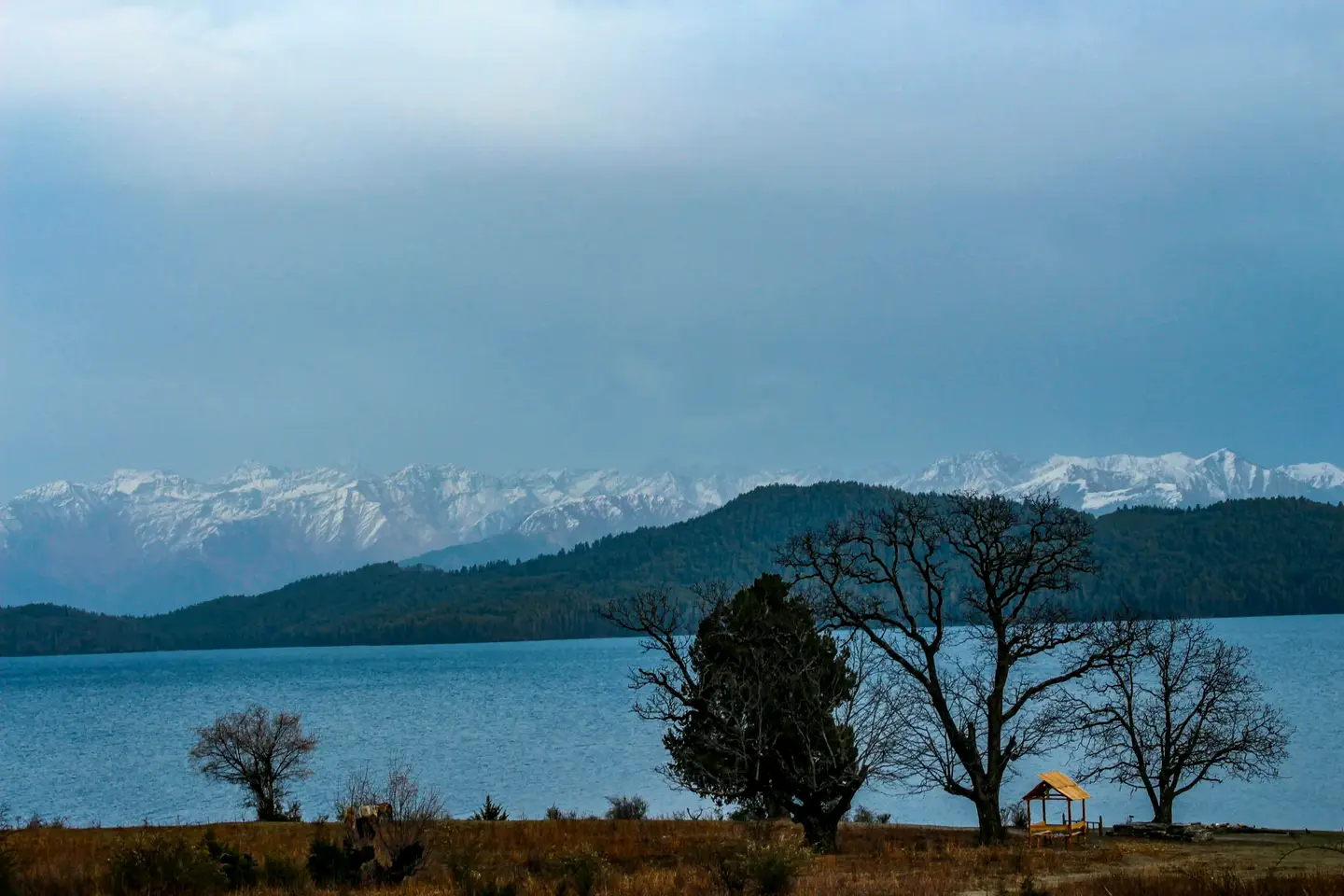
A Visual That Defies Description
The payoff for this arduous journey arrives suddenly. After days of walking through dense forests of blue pine, juniper, and spruce, the tree line breaks. You step out onto a high ridge, and there it is.
At 2,990 meters above sea level, Rara is Nepal’s largest lake, but its scale is somehow humbled by the sheer majesty of its setting. Spanning over ten square kilometers, the lake is a deep, mesmerizing shade of azure that seems to shift colors depending on the mood of the sky. On a windless morning, the surface becomes a flawless, liquid mirror, reflecting the snow-capped peaks of the Kanjirowa ranges.
"Standing on the edge of Rara, the first thing you notice is the silence. Not the absence of noise, but the presence of a deep, resonant quiet."
In our modern lives, we are constantly surrounded by the low hum of electricity, the distant roar of traffic, and the digital chatter of notifications. Rara strips all of that away. Here, the only soundtrack is the gentle lapping of the water against the rocky shore, the rustle of the wind through the conifer needles, and the distant, haunting cry of a bird of prey circling above.
The Living Sanctuary
The lake sits at the heart of Rara National Park. Walking its perimeter feels like walking through a living documentary. The surrounding hillsides are home to the elusive Himalayan black bear, the endangered red panda, and even the snow leopard.
More visible is the rich birdlife. Rara is a crucial wetland habitat. If you sit quietly, you might see migratory waterfowl gliding across the glassy surface. Keep your eyes peeled on the forest edges, and you might be rewarded with a flash of iridescent color—the Danphe, or Himalayan Monal, Nepal’s flamboyant national bird.
Human Warmth in the Wild
Despite its wildness, Rara is not entirely devoid of human warmth. The shores are dotted with a few small settlements and basic teahouses. These are simple, timber-framed homes opened to weary travelers. Staying here is an exercise in humility and connection.
You will sleep under thick woolen blankets in a cold room, warmed only by a communal wood-burning stove. It is in these smoky, dimly lit dining rooms that the true magic of Rara reveals itself. Conversations become deeper, eye contact becomes meaningful, and the simple act of sharing a meal becomes a profound act of human connection.
The River of the Milky Way
As the afternoon fades, the transformation of Rara is complete. The sun dips below the surrounding ridges, casting the lake in shades of deep indigo. The temperature plummets, but it is the night sky that will forever alter your perspective.
Free from light pollution, the sky above Rara Lake is a sprawling, dizzying canvas of stars. It is a dense, glowing river of the Milky Way, so bright and textured that it feels like a physical ceiling you could reach out and touch. You find a strange, comforting peace in your own insignificance.
Rara Lake offers space. Space to breathe, space to think, and space to simply exist in the presence of raw, unspoiled nature. Long after you return to the noise of modern life, the memory of that vast, quiet blue lake remains a secret sanctuary in your mind—a place you can always return to when the world becomes too loud.
Expedition Essentials
Talcha Airstrip: Most trekkers fly from Nepalgunj to Talcha. Be prepared for weather-related delays—flexibility is a requirement for Rara.
Seasons: Spring (March-May) for blooms or Autumn (October-November) for the crystalline sky and perfect reflections.