When most travelers close their eyes and imagine Nepal, their minds instantly conjure images of extreme altitudes, freezing base camps, and the grueling physical triumphs of high-altitude trekking. Nepal is so deeply associated with the stark, jagged beauty of the Himalayas that many visitors forget the country possesses an entirely different, much softer topography.
Hidden away in the Kaski District, nestled in a lush subtropical valley, is a world defined not by thin air and ice, but by gentle breezes, still water, and vibrant greenery. This is Pokhara, and at its center lies the glittering, undeniable soul of the city: Phewa Lake.
The Mother of Tourism
If the Everest region is the stern, demanding father of Nepalese tourism, Phewa Lake is the gentle, welcoming mother. It is a place of immense, accessible beauty that offers a profound sense of tranquility without requiring a week-long trek to achieve it.
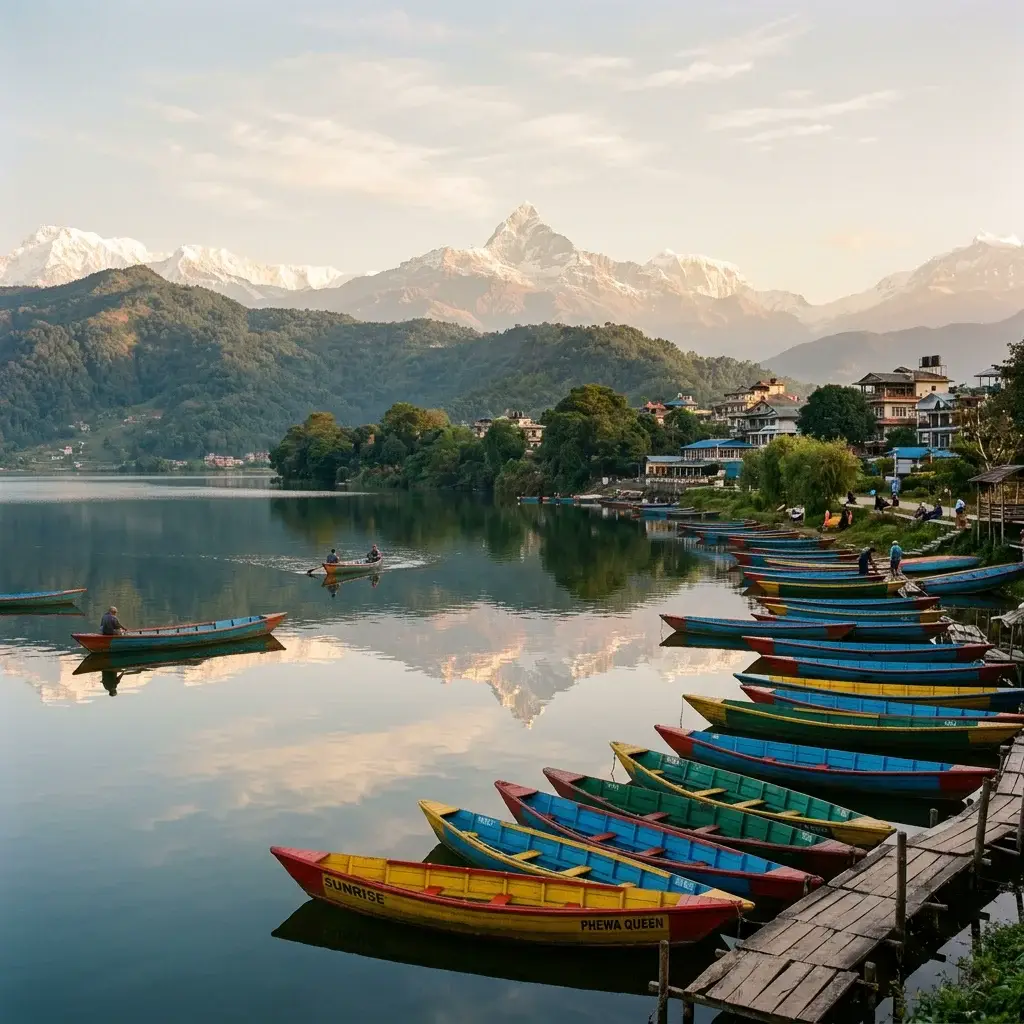
Phewa Tal, as it is known locally, is the second-largest lake in Nepal, but its scale feels perfectly intimate, cradled as it is by the surrounding hills and the towering wall of the Annapurna range to the north.
A Double Dose of Grandeur
The true magic of Phewa Lake lies in its frame. On a clear morning, before the wind picks up and the kayaks scatter across the surface, the water transforms into a flawless, liquid mirror. The snow-capped peaks of the Annapurna massif, dominated by the iconic shark-tooth profile of Machhapuchhre, are captured perfectly in the lake’s depths.
"Watching the sunrise turn the snowy peaks from pale blue to blazing gold, while the identical image burns in the water below you, is a visual paradox that feels almost surreal."
Tradition on the Water
To truly experience Phewa Lake, you must get on the water. Renting one of the brightly painted, traditional wooden dugout canoes—steered expertly by a local boatman using a single, long oar—is a rite of passage. As you glide silently away from the noisy shoreline, the perspective of the city shifts. The modern concrete buildings fade, replaced by the dense green canopy of the surrounding forests.
Your destination is almost always the same: the Tal Barahi Temple. The Short canoe ride is wonderfully meditative, but stepping off the boat onto the island’s stone steps feels like crossing into a different dimension. The island is a spiritual oasis, thick with the scent of marigold offerings and burning incense.
The Pulse of Lakeside
The eastern shore, known simply as "Lakeside," is the undisputed traveler hub of Nepal. Today, it has evolved into a sophisticated, bustling maze of narrow alleys lined with colorful handicraft shops, cozy bookstores, and rooftop bars.
It also serves as the ultimate viewing gallery for Pokhara’s thriving adventure culture. Look up at almost any given moment, and you will see dozens of colorful paragliders spiraling down from the surrounding hilltops. It is the only place in the world where you can drink a cappuccino, watch someone fly over a Himalayan peak, and look at a perfect reflection of that same peak, all at the exact same time.
The Golden Hour
As the day progresses, the intense midday heat softens into a warm, golden haze. The sunsets at Phewa Lake are legendary; the water acts as a vast palette, reflecting exploding colors of magenta, tangerine, and fiery red.
The paved walkway that lines the eastern shore fills with an eclectic mix of humanity. Local families out for an evening stroll, Hindu holy men in saffron robes, and travelers from every corner of the globe gather to watch the sky burn. Phewa Lake is the rare destination that manages to be all things to all people—a spiritual center, a playground, and a sanctuary.
After the physical exhaustion of a high-altitude trek, or before the humid, intense days of a jungle safari in Chitwan, Phewa Lake offers a necessary pause. It is a place that asks nothing of you but to simply sit, breathe, and watch the sky reflect on the water.
Expedition Essentials
Seasons: October to November for clear mountain views; March to May for warm weather and paragliding conditions.
Quiet Mornings: Rent a boat at 6:30 AM before the paragliders launch. The water is at its most calm, providing the iconic Machhapuchhre reflection.