If you have spent any time looking at photographs of Nepal, you have been conditioned to expect a very specific aesthetic. The images that sell a million guidebooks are invariably impossibly green: terraced hills glowing in the monsoon rain, dense rhododendron forests dripping with moisture, and thundering white-water rivers cutting through lush, tropical valleys. Nepal is so deeply associated with water and verdant vegetation that the human brain struggles to process the absolute, staggering reality of Upper Mustang.
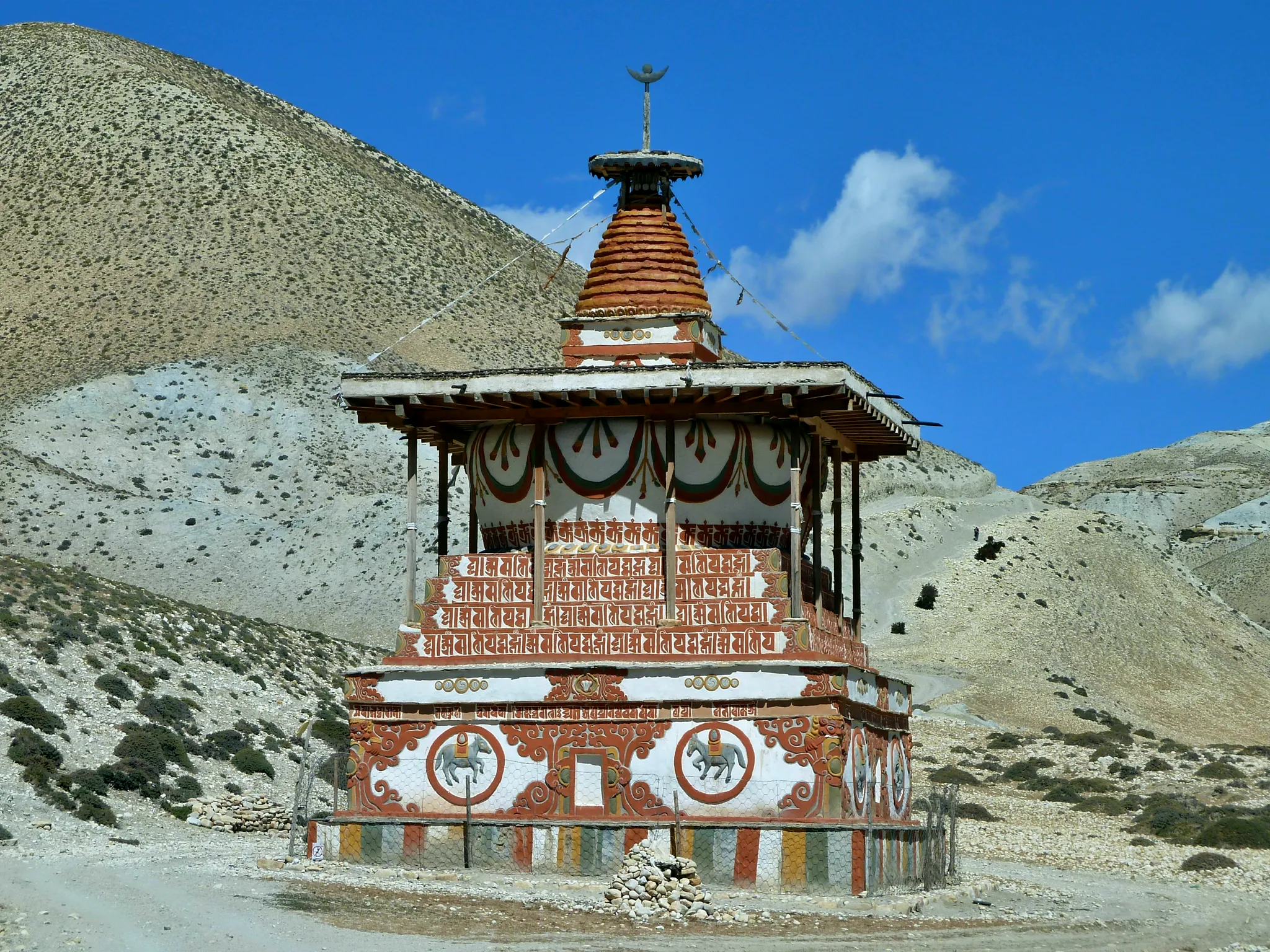
To travel to Mustang is to have every preconceived notion of what the Himalayas look like completely upended. It is a spectacular geographic paradox tucked away in the rain shadow of the Annapurna and Dhaulagiri massifs. When the rest of South Asia is drowning in the torrential downpours of the summer months, Mustang is baking under a relentless, high-altitude sun. It is a landscape of barren, wind-scoured canyons, eroded sandstone pillars, and rolling, ochre-colored deserts that look less like the Himalayas and more like the surface of an alien planet.
A Kingdom Kept Secret
For centuries, this harsh, arid region was known as the Forbidden Kingdom. Cut off from the rest of the world by towering walls of ice and fiercely guarded by its own rulers, Mustang operated as an independent Tibetan enclave. It was a secret repository of ancient Tibetan culture, religion, and art, miraculously spared from the ravages of the Chinese Cultural Revolution that devastated similar physical and geographic heritage just across the border to the north. Until 1992, Upper Mustang was completely closed to foreign visitors, and even today, entry is heavily regulated by costly permits, preserving its isolated mystique.
The journey into Upper Mustang begins in Jomsom, where the Kali Gandaki River carves the deepest gorge in the world. As you travel northward, the greenery abruptly vanishes. It is as if an invisible line has been drawn across the earth. The air becomes thin, dry, and sharp. But it is the wind that truly defines the Mustang experience. By mid-morning, the valley acts as a massive wind tunnel, funneling gale-force gusts northwards from the lowlands. It howls through the canyons, picking up the fine, grey dust and whipping it across the barren plains. You do not just endure the wind in Mustang; it becomes a constant physical and auditory companion, an elemental force that shapes the rock, the architecture, and the resilient character of the Loba people who call this desolate wilderness home.
The Labyrinth of Lo Manthang
The ultimate destination of any Mustang expedition is the walled capital of Lo Manthang. Reaching it feels less like finishing a trek and more like arriving at the edge of the known world. Situated at 3,840 meters, this medieval citadel rises from the dust plains like a mirage. Founded in the late fourteenth century, its towering, stark-white mud-brick walls completely encircle the city, a formidable defense against both marauding bandits and the relentless Tibetan winds.
Stepping through the main gate is to enter a living, breathing labyrinth. Narrow, winding alleyways weave between tightly packed, flat-roofed houses where firewood is stacked meticulously on the edges—a potent symbol of wealth and status in a land where timber is staggeringly scarce. The true treasures of Lo Manthang, however, are its monasteries. Inside structures like the Jampa Lhakhang and the Thubchen Gompa, the starkness of the exterior world is instantly forgotten. The walls are covered from floor to ceiling with astoundingly intricate, centuries-old mandalas and depictions of fierce tantric deities, painted in brilliant lapis lazuli and gold leaf. The contrast between the monochromatic desert outside and the explosion of vibrant color inside the gompas is profoundly jarring and incredibly beautiful.
"Mustang is not just a place; it is a silence. A silence that has been held by the mountains and the dust for centuries. It does not speak to you; it demands that you listen."
The Enigma of the Sky Caves
But perhaps the most enduring mystery of Mustang is not found within the city walls, but etched into the massive, fluted cliff faces that line the Kali Gandaki River. These are the Sky Caves of Mustang—one of the world's greatest, unsolved archaeological riddles. Some 10,000 man-made caves are carved into the fragile, crumbly sandstone walls, many perched hundreds of feet above the valley floor with no obvious means of access.
Who built them? How did they reach them? Why did they go through the unimaginable effort to excavate living quarters, meditation chambers, and multi-storied tombs directly into sheer rock faces? While modern climbers and archaeologists have descended into some of these caverns, uncovering astonishing ancient manuscripts, mummified remains, and pristine murals dating back over two millennia, the complete story of the cave-dwellers remains lost to time. To stand at the base of the cliffs and gaze up at these dark, silent apertures piercing the rock is to be confronted by the immense, unknowable depths of human history.
The Echoes of Tiji
To witness Mustang at its most vibrant is to visit during the Tiji Festival. Held annually in the spring within the courtyard of the royal palace in Lo Manthang, this three-day spiritual event celebrates the victory of good over evil. Monks clad in elaborate, terrifying masks and heavy brocade robes perform slow, hypnotic dances to the booming, resonant sounds of massive copper horns and crashing cymbals. As the dust kicks up from their rhythmic stomping and the villagers gather in their finest traditional turquoise and coral jewelry, it is astonishingly easy to forget what century you are living in.
Mustang asks for endurance from its visitors. It asks you to tolerate the dust that coats your skin, to endure the punishing sun, and to lean heavily into the brutal winds. But in return for your resilience, the Forbidden Kingdom offers something incredibly rare. It offers a glimpse of an ancient, unbroken culture surviving against all odds in one of the most stunning, desolate landscapes on earth. It is a harsh, arid masterpiece—a golden, wind-scoured jewel hidden far beyond the reach of the monsoon clouds.
Expedition Essentials
The Monsoon Exception: Because Mustang lies in a rain shadow, it is one of the few places in Nepal perfect for summer trekking (June–August). May is also ideal for witnessing the Tiji Festival.
Regulated Travel: Entry to Upper Mustang requires a restricted area permit (currently $500 for the first 10 days) and you must travel with a registered Nepali guide.